

DeepSeek Reasonix for design.
DeepSeek Reasonix is an open-source, community-built terminal coding agent powered by DeepSeek models. It reads your repo, edits files, and runs your verification loop cheaply — its whole design is built around DeepSeek's prefix cache to keep long sessions affordable. With references, conventions, and a browser check, it becomes a real design tool. Open Design wires it into an open-source design workflow: your own DeepSeek API key, your files, local-first.

Open Design turns DeepSeek Reasonix into a local-first, open-source design agent — your own DeepSeek API key, your files, a curated skill and design-system library around it.
DeepSeek Reasonix is an open-source, community-built AI coding agent for the terminal, powered by DeepSeek's models. It is not an official DeepSeek product — it is maintained by the esengine GitHub author and the community, and it is built specifically around DeepSeek's prefix-cache mechanics so long, iterative sessions stay cheap. It reads your repository, edits files, runs commands, and works from natural-language tasks rather than just completing lines. You bring your own DeepSeek API key (BYOK), and the agent runs on DeepSeek models such as deepseek-v4-pro and deepseek-v4-flash. This is a practical, end-to-end guide to using DeepSeek Reasonix for UI, frontend, and design-system work, and to wiring it into a structured design workflow with Open Design.
It covers what DeepSeek Reasonix actually is, why a cost-efficient DeepSeek-powered agent fits iterative design, how to set it up from zero with your own key, the reference-to-UI loop, how skills and MCP extend it, how it compares to Codex, Claude Code, Cursor, and Gemini CLI, the pitfalls that make AI output look generic, and how Open Design closes the gap as an open, local-first design layer — a natural pairing, since both are open-source and run on your own machine.
What DeepSeek Reasonix actually is
DeepSeek Reasonix is an open-source (MIT) AI coding agent for the terminal, built by the esengine GitHub author and the community. It is DeepSeek-native: engineered around DeepSeek's prefix-cache mechanics so that long, iterative sessions stay cheap. It reads your repository, edits files with a review-gated SEARCH/REPLACE editor, runs shell commands, and works from natural-language tasks — planning and verifying rather than just completing lines. It is important to be clear that this is a community project, not an official product from DeepSeek the company.
For design work, what matters is that it is a capable, repo-aware coding agent that runs on strong DeepSeek models at low cost. The DeepSeek models it uses are text-only — they do not natively read images — so the practical design loop is reference-driven and verified in a real browser, rather than the agent “seeing” a screenshot directly. The cost efficiency is the design-relevant edge: you can iterate on UI many times without the bill that usually discourages tight loops.
- DeepSeek-native, BYOK: Reasonix runs on DeepSeek models such as deepseek-v4-pro and deepseek-v4-flash. You bring your own DeepSeek API key — the credential lives in your environment, not in the agent's config.
- Repo-aware editing: It reads and edits files in your project with a review-gated editor and runs shell commands, so it can build and iterate on real UI code in your own repository.
- Skills + MCP: It supports Markdown-authored skills and MCP servers, so you can give it durable conventions and connect external context like a design source.
- Vendor: community / the esengine GitHub author (not DeepSeek the company)
- Credential: your own DeepSeek API key (BYOK), supplied via environment
- License: MIT, open source
Why a cost-efficient DeepSeek agent fits design
DeepSeek Reasonix's design edge is less about a single flashy capability and more about making iterative UI work cheap and repeatable — but, as with every agent, taste still has to be supplied.
- Cheap, tight iteration: Because it is engineered around DeepSeek's prefix cache, long design sessions stay affordable — so you can run the build-verify-refine loop many times instead of rationing it.
- Repo-aware reuse: It edits files directly in your repo, so it can reuse your existing components and tokens rather than inventing one-off styles, when you point it at them.
- Conventions in skills: Markdown skills and project config let you encode tokens, components, and review rules, so the agent works against your brand instead of a default look.
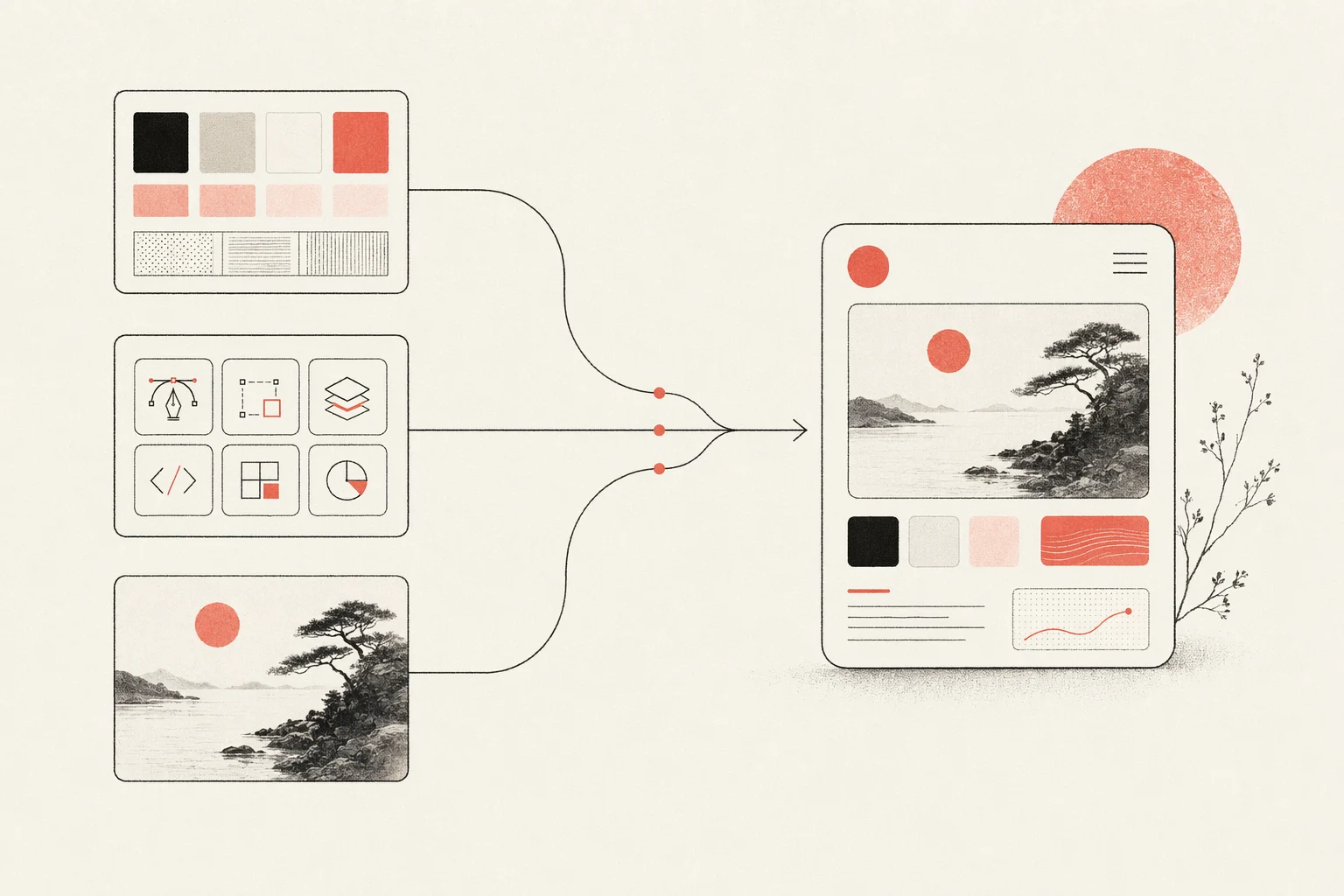
The lesson is the same one every agent teaches: DeepSeek Reasonix does not have taste by default. It produces good design when you give it constraints — a design system, an aesthetic skill, and concrete references described to it — and a browser to verify against. Open Design packages exactly those inputs, which is why the two fit together (more below).
Set up DeepSeek Reasonix for design work, from zero
Here is the path from a clean machine to a DeepSeek Reasonix that can build and verify UI. Because it is a community project, always follow the install instructions in the repo's README; the outline below is the general shape.
# 1. Install DeepSeek Reasonix (Node 22+) — see the repo README
npm install -g reasonix

# 2. Bring your own DeepSeek API key (BYOK)
#    Reasonix reads it from your environment, not from config files.
export DEEPSEEK_API_KEY=sk-...    # your DeepSeek key

# 3. Start it in your project
cd your-project
reasonix                         # see README for the exact subcommands

# 4. Add a design source via MCP (optional)
#    e.g. a Figma MCP server, configured per the repo docs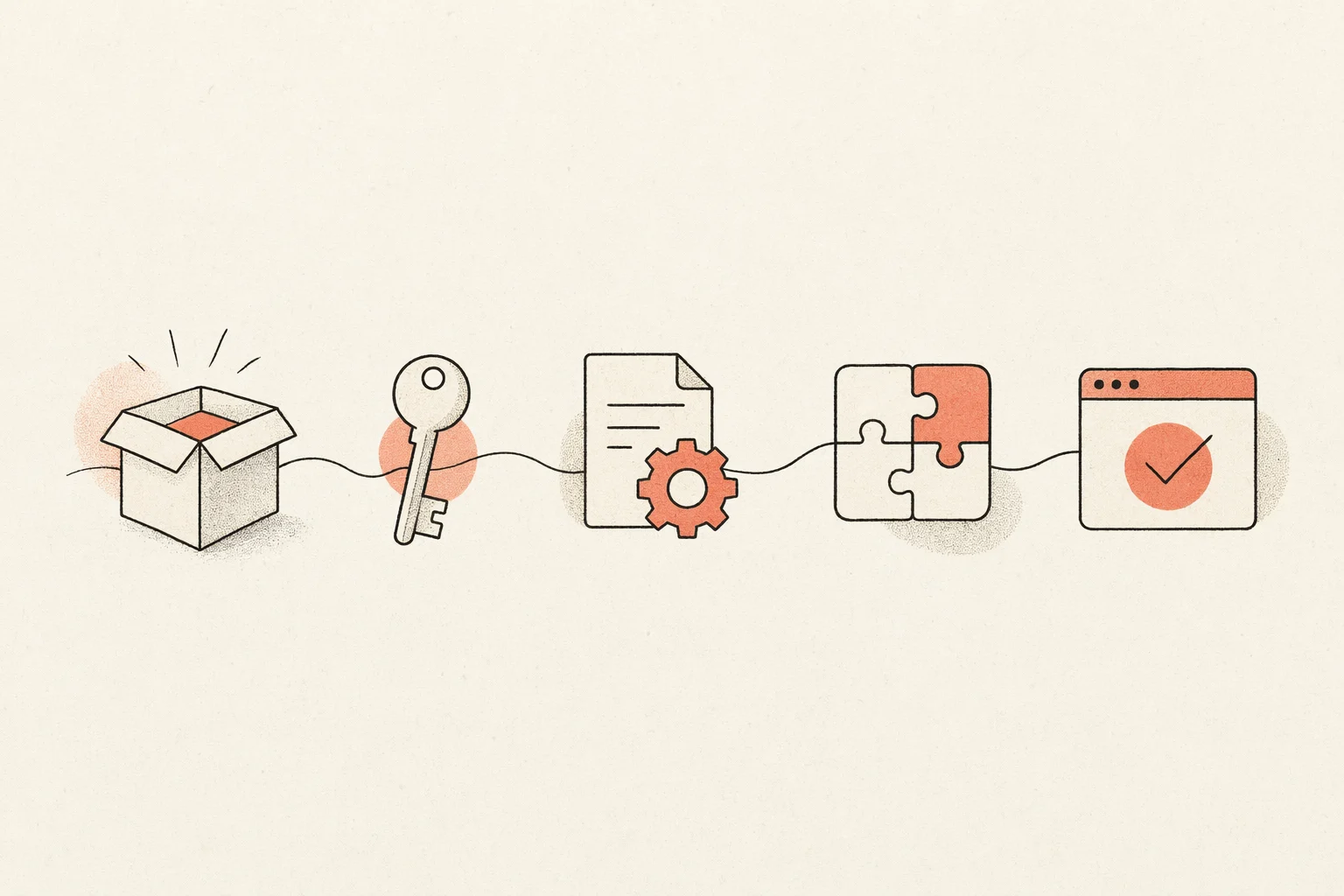
- Encode your design rules: Put your tokens, primitives, and conventions into a skill or project config and point Reasonix at them, so output matches a brand instead of defaulting to a generic look.
- Add browser verification: Since DeepSeek models are text-only, wire a Playwright or browser MCP so the agent renders in a real browser and checks its output across breakpoints rather than only confirming the build passes.
The reference-to-UI workflow
The highest-leverage design loop with DeepSeek Reasonix is turning clear references into working, responsive UI and iterating until it matches. Because the DeepSeek models are text-only, the references are fed as detailed descriptions and specs — not read natively as images — and the match is confirmed by rendering in a real browser.
- Translate your references into concrete specs — describe layout, spacing, hierarchy, and states (desktop and mobile, hover, empty, loading) in words, since the model reads text, not pixels.
- Be specific in the prompt; vague prompts produce generic UI even with a strong model.
- Keep your design system and conventions in a skill or project config, and tell Reasonix where the tokens and canonical primitives live.
- Run a dev server and verify the result in a real browser, resizing to breakpoints — wire a browser MCP so the agent can self-check.
- Iterate by comparing the rendered UI back to your references in the browser — not merely confirming it builds.
Give the agent concrete constraints in the prompt rather than a vague brief:
reasonix
# in the prompt:
> Implement this design in React + Vite + Tailwind + TypeScript.
  Reference: a two-column hero, 48px vertical rhythm, brand teal
  accent, system-ui type — desktop and mobile described in DESIGN.md.
  Reuse my existing design-system components and tokens.
  Match spacing, layout, and hierarchy; make it responsive.
  Render it in a browser and iterate until it matches the spec
  across breakpoints.
Keep prompts small and focused, commit good iterations and revert bad ones (telling Reasonix when you revert), so each pass builds on a clean base — and so the cheap, cache-friendly loop stays productive.
Skills, MCP, and config
A few extension points make DeepSeek Reasonix practical for sustained design work, and they map cleanly onto an open design workflow.
- Markdown skills: Reasonix supports skills authored in Markdown — the durable home for your design conventions, tokens, and review checklists, applied on every run.
- MCP servers: It integrates MCP servers, the portable way to bring in design context and external tools — most relevantly a design source like a Figma MCP server — that work across agents, not just Reasonix.
- Project config and built-in tools: Per-project config plus built-in file, shell, and web tools let it gather context and run the verification loop without leaving the terminal. Check the repo README for exact config paths.
These are portable, multi-agent capabilities — exactly the kind of thing Open Design is built to orchestrate, rather than re-create per project.
DeepSeek Reasonix vs Codex vs Claude Code vs Cursor vs Gemini CLI for design
There is no single winner for design work — each agent has a different strength, and experienced teams stack them. A fair summary:
| Agent | Design strength | Best for |
|---|---|---|
| DeepSeek Reasonix | Open-source and DeepSeek-powered; cost-efficient via prefix caching, BYOK with your own DeepSeek key (community-built, text-only models) | Cheap, high-volume iteration on UI in your own repo |
| Codex | Strong visual polish with a frontend skill; sandboxed async builds | Delegated async builds and portable AGENTS.md rules |
| Claude Code | Specific design decisions (hex, spacing, type) and codebase-aware UX | Frontend reasoning and large-context refactors |
| Cursor | Visual build-and-see loop with live preview and inline edits | Tight iterate-and-watch UI work inside an IDE |
| Gemini CLI | Strong multimodal image understanding and a 1M-token context; open-source with a free tier | Screenshot-heavy work and holding a whole design system in context |
The recurring community verdict is that taste comes from humans: all of them default to a generic aesthetic without skills, references, and constraints. That is the real problem to solve — and it is design-tool-shaped, not model-shaped.
Pitfalls, and how to avoid the “AI slop” look
The most common complaint about AI-generated design is that it looks generic — soft gradients, floating panels, oversized rounded corners, dramatic shadows, an Inter-and-purple vibe that “screams an AI made this.” Other reported issues include broken mobile layouts and instructions leaking into UI copy. None of these are unique to DeepSeek Reasonix; they are what happens when any agent runs without a curated design context — and because its models are text-only, describing references precisely matters even more.
- Add an aesthetic skill: A curated design skill forces the agent to commit to a real direction instead of the default look.
- Verify in a real browser: Since the model cannot see, render and self-check across breakpoints in a real browser so layouts do not silently break on mobile.
- Supply tokens and described references: Real design tokens and precisely described reference states are the single biggest lever on output quality for a text-only agent.
- Encode rules in a skill or config: Put “no hero cards, max two typefaces, brand-first hierarchy” style rules where the agent reads them every run.
Notice that every mitigation is about giving the agent a curated design context. Maintaining that context by hand, per project, is the toil Open Design removes.
Designing with DeepSeek Reasonix inside Open Design
Open Design is the open-source design layer the workflow above keeps asking for. It treats DeepSeek Reasonix as a first-party adapter and wraps it in a curated skill and design-system library, a structured render pipeline, and a local desktop UI — so the design context that makes Reasonix good is there from the first run, not assembled by hand each time. Both are open-source and local-first, which makes the pairing a natural fit.
- Install Open Design and select DeepSeek Reasonix as your agent.
- Authenticate with your own DeepSeek API key (BYOK) — credentials stay on your machine and are never proxied through us.
- Pick a design system and a skill, then generate decks, prototypes, and landing pages with consistent taste.
- Every artifact and DESIGN.md file lives in your own repo, not a hosted cloud.
Same DeepSeek Reasonix agent, same key — plus a real, portable, open-source design workflow around it. It is local-first and open-source, so nothing about your work or your credentials leaves your machine.
Frequently asked questions
-
01 Can DeepSeek Reasonix really do design work?
Yes — with an aesthetic skill, a design system, and precisely described references in context, DeepSeek Reasonix produces production-quality, responsive UI in your own repo, and you verify output in a real browser. Its DeepSeek models are text-only, so the loop is reference-described-and-verified rather than image-reading. Without that context it tends to default to a generic look, which is the gap Open Design fills.
-
02 Do I need to pay to design with DeepSeek Reasonix?
You bring your own DeepSeek API key, so you pay DeepSeek for usage (BYOK) — but the agent is built around DeepSeek's prefix cache to keep that cost low across long sessions. Reasonix itself is free and MIT-licensed. Open Design never proxies your credentials.
-
03 Is DeepSeek Reasonix an official DeepSeek product?
No. DeepSeek Reasonix is a community-built, open-source project from the esengine GitHub author — it runs on DeepSeek's models and uses a DeepSeek API key, but it is not made or endorsed by DeepSeek the company. DeepSeek is a trademark of its respective owner.
-
04 DeepSeek Reasonix or Claude Code for frontend design?
Both can do real design work. Claude Code is known for specific, codebase-aware design decisions; DeepSeek Reasonix's edge is being open-source and cost-efficient, running cheap, high-volume iteration on DeepSeek models with your own key. Many teams use more than one — Open Design lets you switch agents without changing your design workflow.
-
05 How do I connect DeepSeek Reasonix to a design source like Figma?
Reasonix supports MCP servers, so you can add a design-source MCP (such as a Figma MCP server) per the repo's docs. The agent can then pull real design context — components, variables, layout data — as text it can act on, so the generated code matches the source instead of approximating it.
-
06 Is Open Design affiliated with DeepSeek?
No. DeepSeek Reasonix is a community project that runs on DeepSeek's models; Open Design is an independent open-source project that supports it as a first-party adapter. It is affiliated with neither DeepSeek the company nor the Reasonix maintainers. DeepSeek is a trademark of its respective owner.
-
07 Are my files and credentials safe?
Yes — Open Design is local-first and open-source. Your files, artifacts, and DESIGN.md stay in your own repo, and your DeepSeek API key is used directly by your agent, never routed through Open Design servers.
Design with DeepSeek Reasonix, the open way.
Bring your own DeepSeek API key, keep every file local, and get a curated design library around the open-source agent you already use.